
Plus, offensive things Caesar allegedly said
Cavete Idus Martias!
What did Caesar do that supposedly provoked the conspirators into action on the Ides of March in 44 B.C. ? We’ve made an intermediate-advanced Latin video detailing the reasons given in Roman sources. We chose to cover the Periocha, a paraphrase by an anonymous author, of Livy’s Ab Urbe Condita because 1) this book of AUC itself is lost and 2) the Periocha is more intermediate-level than Suetonius or Cicero, though we do discuss an excerpt from Cicero’s Philippics in the video.
In the Periocha, we are given three ways that Caesar inflamed the hatred of the the conspirators and his opposition. The first reason given in the Periocha is also the most significant reason that Suetonius gives in his biography of Caesar for the deadly hatred that was aroused against him. Interestingly, this reason is purely symbolic.
From the Suetonius Vita Divi Juli:
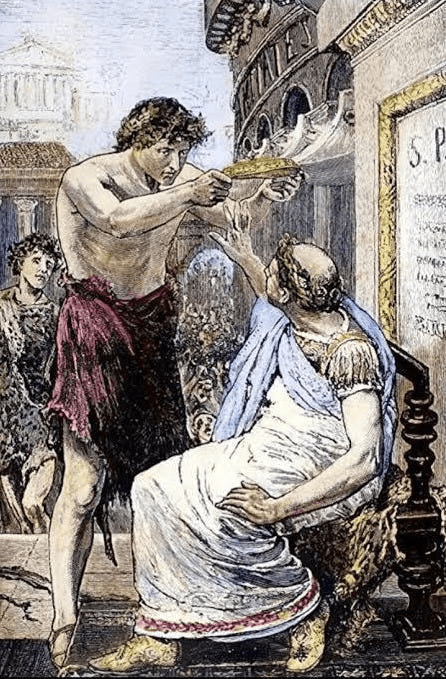
“But it was from this especially action that he caused deadly hatred towards himself: he received the senators approaching him with very many highly honorary decrees sitting in front of the temple of Venus.”
Verum praecipuam et exitiabilem sibi invidiam hinc maxime movit: adeuntess se cum plurimis honorificentissimisque decretis universos patres conscriptos sedens pro aede Veneris Genetricis excepit.
The most important word here is “sitting,” and we read the same in the Periochia: Caesar remained seated when the Roman senators approached him acting in their official capacity. This was interpreted as a flagrant display of disrespect.
Watch our video to learn what else Caesar did to inspire hatred in the senatorial faction and what Cicero thought about Mark Antony’s hijinks during the festival of Lupercalia:

He said what??
The following things that Caesar allegedly said were, according to Suetonius, recorded by Titus Ampius, who was a contemporary of Caesar. However, it should be noted that Ampius was a staunch pro-Pompeian and Roman senator and proconsul. Therefore, his harsh portrayal of Caesar should not be surprising.
Nec minoris inpotentiae voces propalam edebat, ut Titus Ampius scribit:
“And no less arrogant were the things he said publicly, as Titus Ampius writes:”
1) Nihil esse rem publicam, appellationem modo sine corpore ac specie.
“The Republic is nothing: it’s a name without a body or appearance.”
2) Sullam nescisse litteras, qui dictaturam deposuerit.
“Sulla was ignorant since he renounced his dictatorship.”
3) Debere homines consideratius iam loqui secum ac pro legibus habere quae dicat.
“People ought to speak with him more carefully to consider his word to be the law.”
4) Eoque arrogantiae progressus est, ut haruspice tristia et sine corde exta quondam nuntiante futura diceret laetiora, cum vellet; nec pro ostento ducendum, si pecudi cor defuisset.
“He went so far in his arrogance that when a haruspex announced that the innards were unfavorable and without a heart, he said that they would be more favorable in the future when he wished it and that it shouldn’t be taken as portent if a beast had no heart.”
 Lupus Alatus
Leave a comment